Most Florida towns got their name from a person, a railroad stop, or whatever happened to be growing nearby. Zephyrhills got its name from the weather. And not the sunshine — every town down here was already selling the sunshine. This one was named for the breeze.
A zephyr is a soft west wind, the gentle kind that slips through on a summer evening and lets the heat finally let go of you for a minute. Somebody stood on a stretch of inland Florida that had two things most of the flat peninsula doesn’t — a little roll to the ground and a steady air moving over it — and decided that was worth putting right on the sign. Zephyr for the wind. Hills for the land. The whole town is named after the feeling of cooling off.
Which is a strange thing to build a town on, when you stop and think about it. How do you sell a breeze? And who on earth was buying?
Cool was a place you went, not a thing you owned
To get why anyone would pay for moving air, you have to remember what a Florida summer actually was before the machine showed up. There was no air conditioning. None. Not in the house, not in the store, not in the church, not in a single room anywhere a person lived or worked or tried to sleep.

So cool wasn’t something you made. It was something you went and found. The shady side of the street at noon. The screened porch after dark. The one chair on the whole property where the breeze actually came through, which every family knew and quietly fought over. You chased the cool around the house all day like a cat following a patch of sun, except backwards.
In that world, a breeze wasn’t a nice extra. It was the entire cooling system. So when a man turned up promising a whole town’s worth of moving air, up on ground that caught it, it didn’t sound like a sales gimmick. It sounded like relief.
He was selling it to old soldiers
The man doing the promising was Captain Howard B. Jeffries, a Union officer from Pennsylvania who’d come through the Civil War and out the other side with an idea. In 1909 he bought a huge stretch of this country — tens of thousands of acres — and started a company aimed at one very particular customer: old soldiers.

By the early 1900s the men who’d fought the Civil War were in their sixties and seventies, and a hard northern winter was no small thing for a body that had already been through enough. Jeffries’ pitch was almost gentle. Come south — not down into the sticky, swampy part, but up here to the hills, where the air moves and the winters barely bite. He advertised it across the country to members of the Grand Army of the Republic, the great veterans’ organization of the day, and the old men came.

They came in enough numbers to build a hall. When it went up around 1910 it was the largest wood-frame building in the county — a meeting place for the local Grand Army post and the heart of the little colony. The old soldiers held their reunions in it. That building is the one that explains why the town is here at all.

The hills weren’t just a pretty word
And the hills in the name weren’t only marketing. There’s a quiet piece of physics in them. Cold air is heavy, so on a freezing night it slides downhill and pools in the low spots, which leaves the high ground a touch warmer. That “touch warmer” is the whole ballgame in the orange business, and the same rolling ridges that caught Jeffries’ breeze also saved the groves from frost.

So the geography did double duty. Up on the hills you got the wind in July and dodged the worst of the frost in January — the two things a settler and a citrus tree both care about most. Jeffries settled in himself, building a frame house in town in 1911, and went on selling the one thing he had plenty of. The product was never really the dirt. It was the weather sitting on top of it.

There was one more thing under the ground that fit the pitch almost too well: the water. Clean, cold spring water, the kind that comes up tasting like nothing at all, which is exactly what you want it to taste like. The town leaned into that so hard that decades on, a company started bottling it and shipping the name all over the country. You have probably held a bottle of it in a checkout line without a second thought.

“City of Pure Water,” the old brochures said. Think about the thread there. A town founded to sell a cool, clean climate to tired old men ended up selling cool, clean water with the very same name on the label. For a good long while, the entire product this place offered was, one way or another, the weather.
Then the cool showed up with a plug on it
Here’s the turn. The thing the town had been named for all along — actual, reliable cool — finally arrived. And it didn’t come floating in on a west wind. It came in a box, and it came late.
The town kept growing through the decades, and during the Second World War the Army dropped an airfield right at the edge of it to train pilots. The field brought in young men by the hundreds, and after the war a lot of them, and plenty of families chasing the same warm winters the veterans once had, kept coming south.

They landed in a country that was just then figuring out home air conditioning. Right after the war the machine got small enough, and cheap enough, to sit in a window instead of filling a basement. The same trick a big building had needed a whole engine room for shrank down to a humming box one man could carry up a porch step.

And that was the quiet end of the whole breeze economy. A family on a Zephyrhills street could now shut the windows on a July afternoon, flip a switch, and sit in air cooler than the finest wind off the finest hill had ever delivered. No waiting for evening. No chasing the shade. The cooling the town was named for had finally arrived — running on electricity, humming away whether the west wind blew or not.
What the breeze left behind
So the porches went quiet. The beds came back indoors. Nobody fought over the one good chair anymore, because every room was the good chair. The thing Jeffries had built an entire town to sell — moving air you had to go outside and wait for — had been replaced by a machine that never made you wait at all.

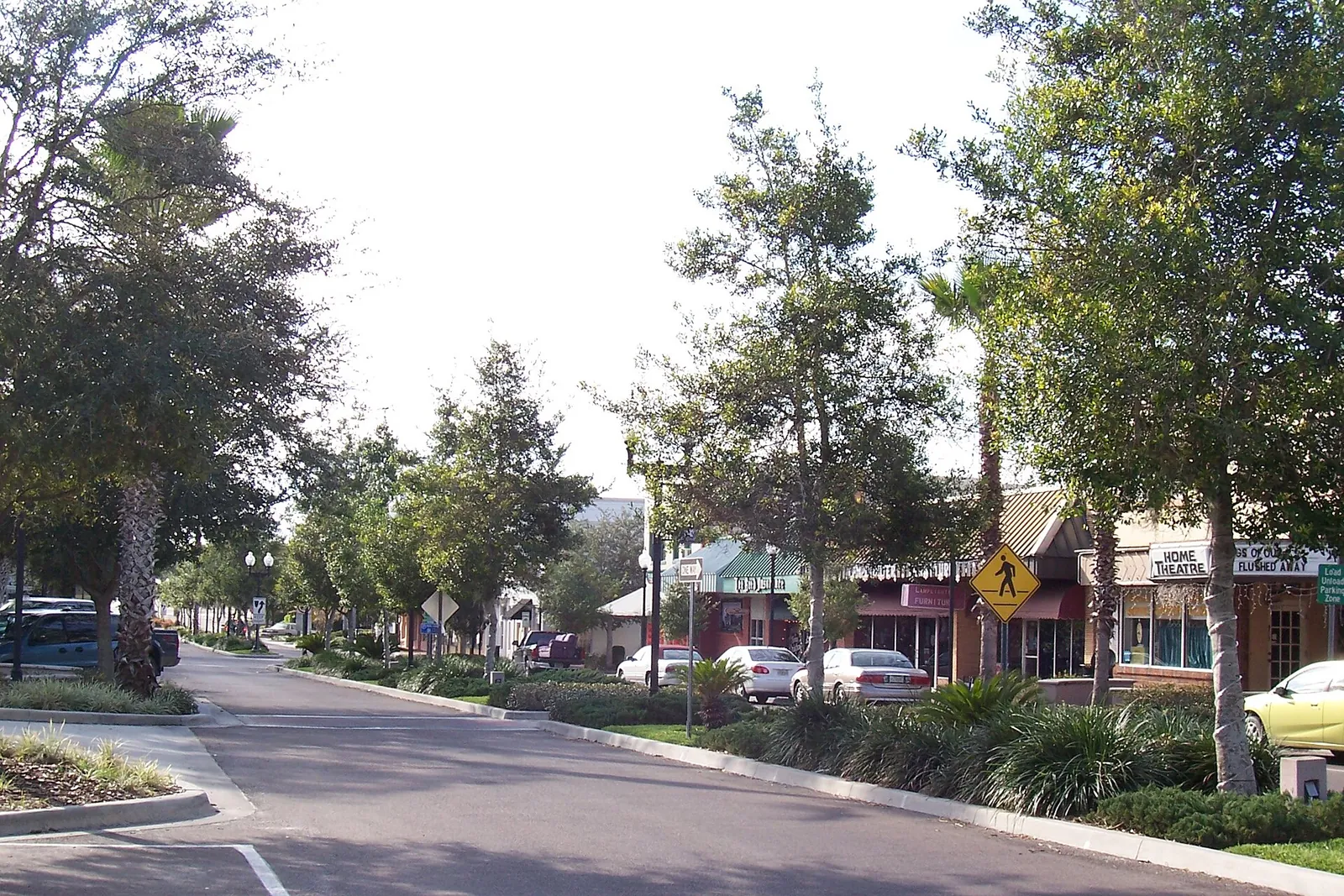
But the town Jeffries made is very much still here, and most of the old bones stayed. The Grand Army hall. The founder’s yellow house. The little stone women’s club, the frame storefronts, the quiet grid of a place that was laid out for old soldiers to grow comfortable in.

Zephyrhills is still named after a wind that almost nobody sits outside to feel anymore. The breeze is right where it always was — soft and out of the west, sliding over the same hills it slid over when the old soldiers first stepped off the train to meet it. It’s just that nobody’s counting on it now. The cool this town promised for a hundred years finally came home. Not down out of the sky, the way the name says. Out of a machine.